



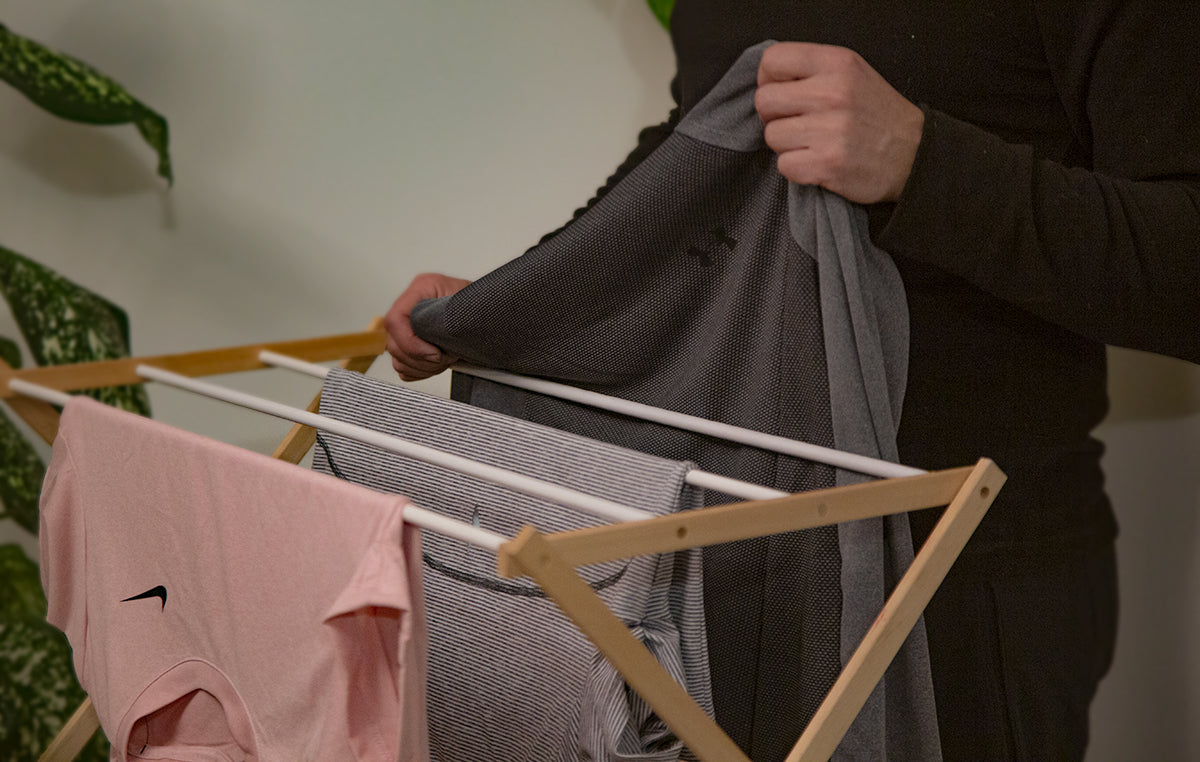
Keep the freshness and pleasant smell of the first days while extending the lifespan of your sportswear—it’s possible. Here are our tips and care advice for you.
Air out your sportswear as soon as possible!
Mold loves damp and dark places. To prevent its growth, hang your clothes as soon as you return from training until they are fully washed or dried.
Everyday products against odors
No need to use a bunch of chemical products. To deodorize your clothes, there are natural, biodegradable, and economical solutions.
Rub with baking soda
Baking soda is a fungistatic. It inhibits the growth of mold and bacteria. It’s your number one ally for caring for your sportswear. Mix 2 tablespoons of baking soda with water to form a paste to apply directly to the fabric. Let it dry and then wash in the machine.
Bonus: baking soda revives colors.
Vinegar is the enemy of odors
Vinegar, combined with baking soda, forms a powerful duo against bad odors. Adding a little white vinegar to your laundry helps neutralize bacteria. The extra benefit is that it has a descaling effect and removes limescale buildup in your washer.
For more stubborn odors, soak your clothes for 20 to 30 minutes in one part white vinegar to four parts cold water. The acid in the vinegar will deeply dislodge bacteria, impurities, and grease embedded in the fabrics.
Turn your clothes inside out
To prevent fabric wear and those infamous little pills, turn your clothes inside out before washing. Also, turning your running shirt, yoga leggings, or any sportswear protects their technical properties.
Separate clothes by fabric type
Group your clothes by color and textile type. Cotton clothes produce small lint that can stick to the synthetic fibers of sportswear. Technical fabrics are delicate. Thick materials, like denim, cause friction and lead to premature wear of your synthetic shorts, shirts, and leggings.
Put your sports bras in laundry bags to avoid damaging them. This will prevent them from stretching during the wash.
Items likely to cause damage
Hooks, zippers, and Velcro often catch on other clothes. Buttons and other metal pieces can also damage technical fabrics.
Don’t use too much detergent
Use slightly less laundry detergent to wash your sportswear than for your regular loads. Indeed, detergent molecules build up in fibers over washes and attract new bacteria responsible for bad odors.
Why not try our range of soaps specially designed to fight odors and care for your technical textiles? Find them in our stores.
Cleaning Dri-Fit clothes
Use a powder detergent to care for your Dri-Fit items. It is especially effective on stubborn stains and eliminates bacteria thanks to the active oxygen it releases during washing. Prefer cold water: never above 30 degrees Celsius.
Do not use fabric softener
Fabric softener leaves residues on sportswear. Softener sheets clog fabrics and prevent detergent from properly penetrating the fibers. The result: bacteria caused by sweat and dirt are less effectively removed over time.
Tip: to gently soften your clothes, use laundry balls for delicate fabrics.
If possible, avoid using the dryer
Always check the care labels on your clothes to know the brand’s recommendations. Generally, extend the life of your sports gear by air drying it. The high temperature of the dryer damages the fragile membrane of technical fibers.
Wash your sportswear in cold water
Sportswear is made from high-performance technical fabrics like polyester, polyamide, elastane, or Lycra. They don’t like heat and prefer cold water (maximum 30 degrees Celsius).
Washing in hot water can deform your sportswear. Not all brands pre-wash fabrics before manufacturing, so heat can alter the cut of your clothes. If your training shirt is particularly dirty, give it a soak in vinegar and baking soda before washing ;).


Share:
About self-care